The story behind "Givre & Argent".
Eleven years, a single breed, and a name taken straight from the Keeshond's coat — frosted grey, silvery ruff.
It all started with a puppy named Givre.
My first Keeshond, Givre ("Frost" in French), arrived during a particularly harsh Saint-Sauveur winter. I was looking for a dog that would truly love the snow instead of merely enduring it. What I hadn't expected was how completely this dog would become the center of the house — always in whatever room we were in, always watching the door.
After two years of health screening and encouragement from our veterinarian, Givre had her first litter. That litter taught me the essential thing: a puppy handled every day, exposed to cold and warmth, stairs and children, grows into a solid adult. A puppy raised in isolation, even in the best of kennels, never quite makes up that difference.
The kennel's name chose itself: "Givre & Argent" ("Frost & Silver"), for the breed's distinctive coat and for the dog who started it all. Eleven years later, every litter is still born in the house, a few steps from the wood stove.
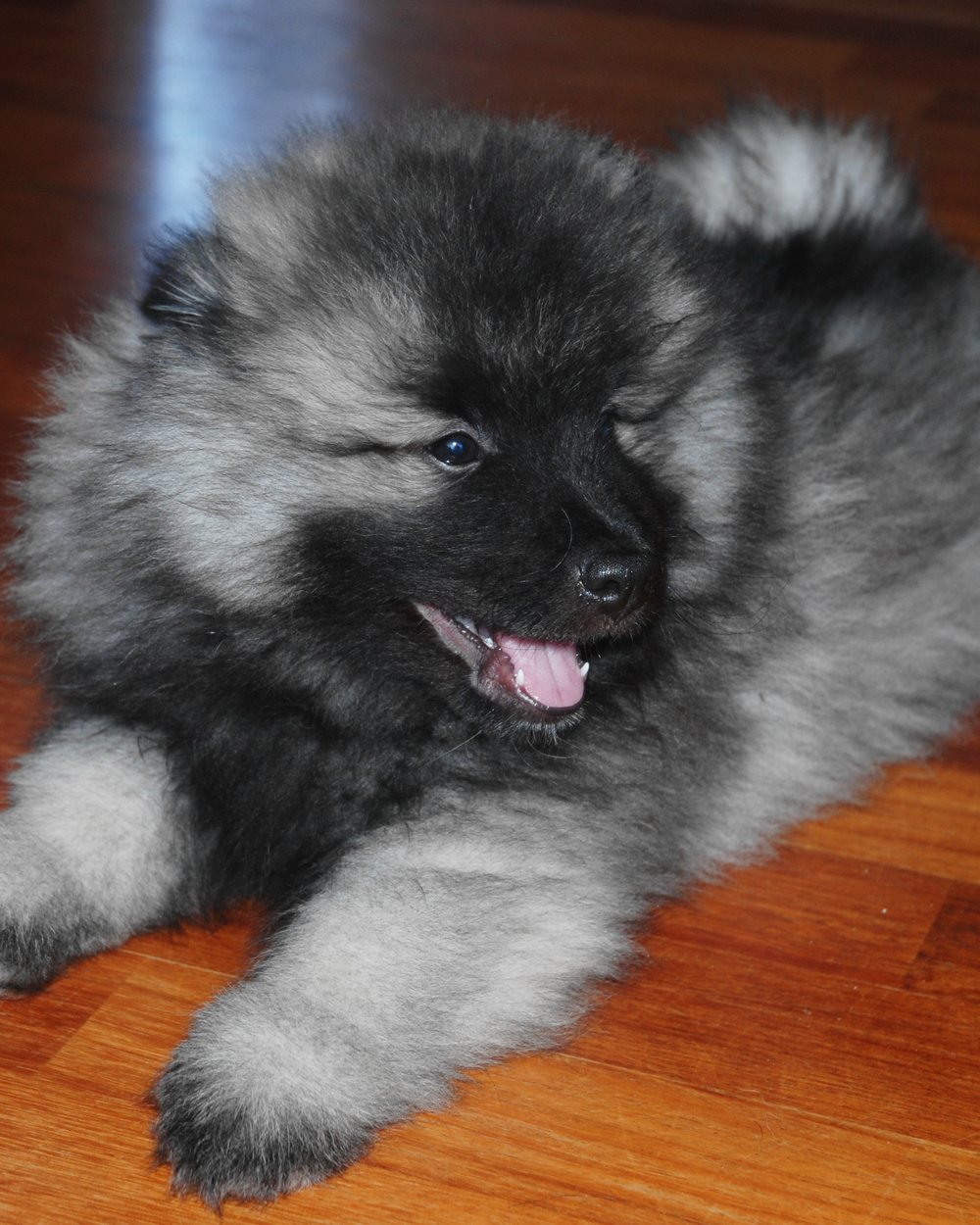
One breed, and nothing else.
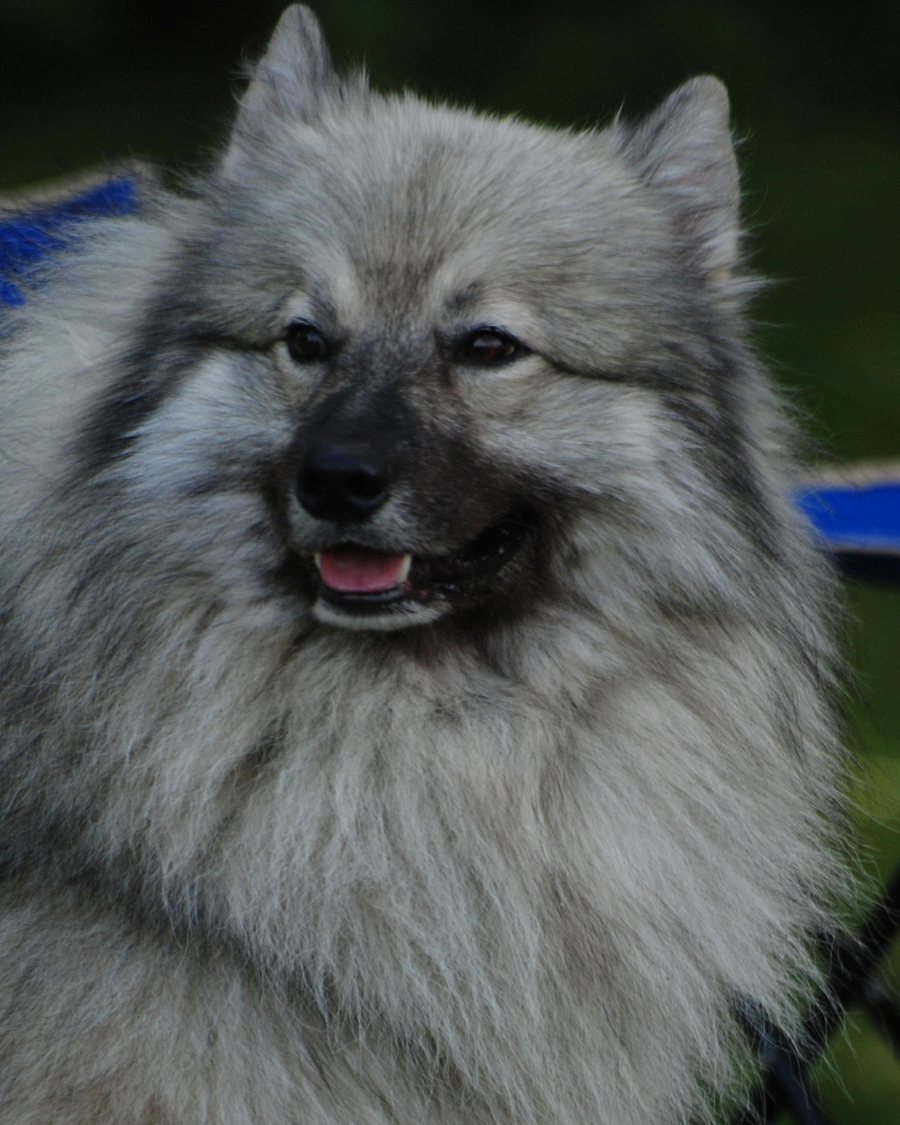
The Keeshond ("miniature wolf dog") looks like no other breed — and it doesn't suit everyone, either.
A coat built for winter
A thick double coat — cream undercoat, silver-tipped guard hairs — with a spectacular ruff around the neck and shoulders, especially on males. It blows coat twice a year, generously.
Worth knowing: weekly brushing at minimum, daily during shedding season. Not the breed for anyone who dreads dog hair.
The "spectacles" and the smile
The breed's signature trait: dark markings that shape "spectacles" around the eyes, different on every dog — something like a fingerprint. The finely fox-like muzzle completes an expression that's always alert.
Worth knowing: no puppy wears exactly the same markings as its parents or littermates.
A vocal house dog
Descended from watchdogs on Dutch canal barges, the Keeshond announces everything — a delivery, a squirrel, a creaking door. An excellent alarm dog, less discreet than a silent lap dog.
Worth knowing: we start "quiet" training early here, but a Keeshond that barks a little is simply a normal Keeshond.
The Keeshond is not a dog you leave alone ten hours a day or house in an outdoor kennel. It is a companion dog first and foremost — if it can't live at the center of your home, this probably isn't the right breed for you, and we'll tell you so plainly.
What we screen for, and what we guarantee.
No breeding happens until both parents have completed the screenings recommended for the breed. Certificates are handed to you in person — not summarized, not "available on request".
Hips and patellas
Hip evaluation and patellar luxation screening, on both parents, before mating.
Heart and eyes
Cardiac auscultation and an annual ophthalmological exam by a specialist veterinarian.
Thyroid follow-up
Regular thyroid panels on our breeding dogs — a particular point of attention for the breed.
A two-year guarantee against serious hereditary conditions, provided in writing. Replacement or refund, your choice.
Come see the house before you decide.
We welcome families by appointment in Saint-Sauveur, even without a firm plan. You'll see where the puppies are born, meet their mother, and get to ask the hard questions.
One piece of advice, even if you don't adopt from us: be wary of a breeder who won't show you where their dogs live, or who offers to meet in a parking lot. It's the most reliable signal there is.